

Why Outer Space Is the Internet's New Comfort Content
On moon joy, the overview effect, and the comfort of cosmic perspective

The internet has recently found comfort in the unexpected: outer space.
Between major headlines and automation anxiety, pictures from beyond the planet have been circulating. Astronauts laughing in orbit. Earth rising above the lunar horizon. A crew hugging in silence with the Moon behind them. The internet has a name for this kind of content: “hopecore.” Moments of sincerity, of community, where people actively seek joy to cut through the noise of the web.
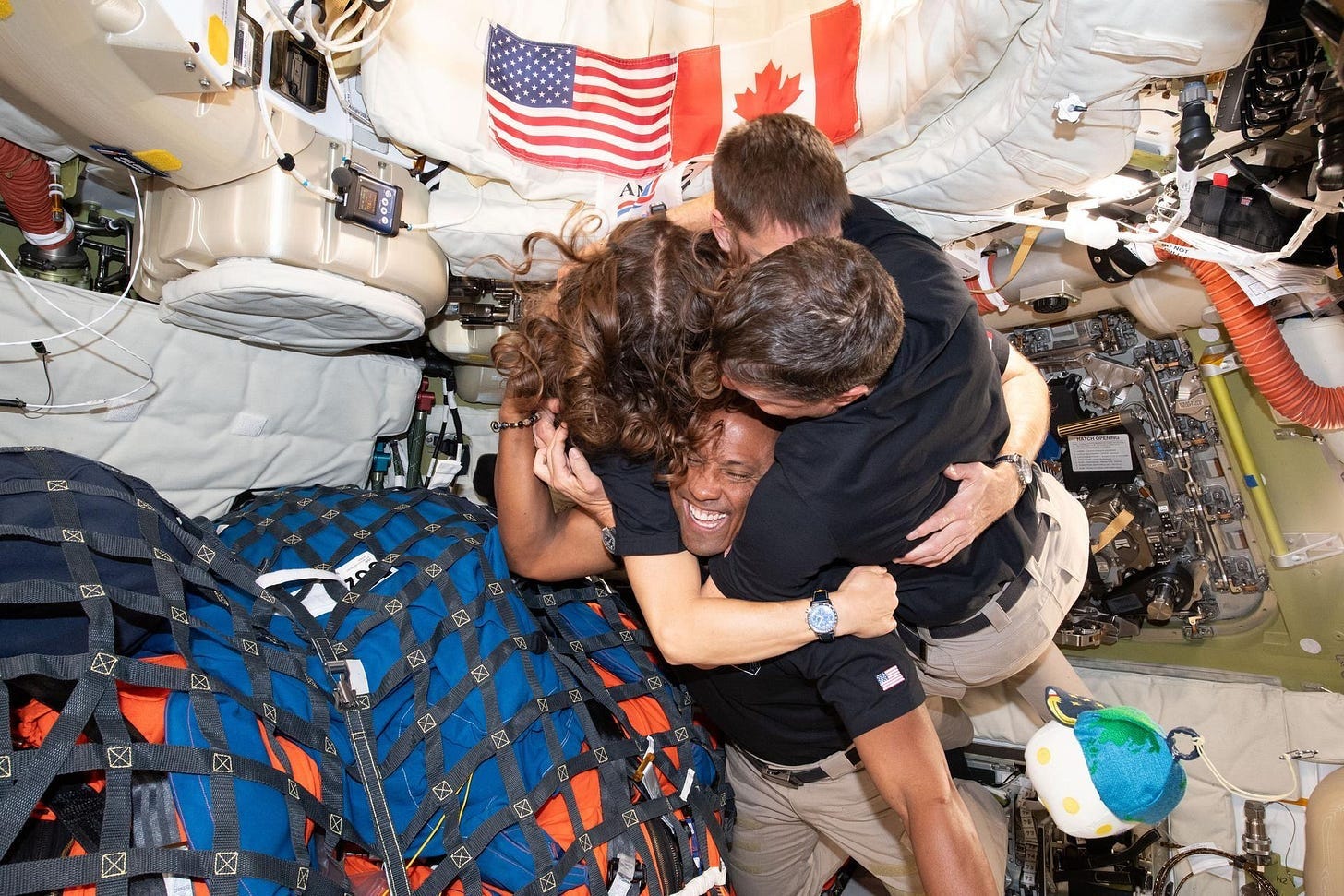
One of the viral pictures came aboard the Orion spacecraft, when four astronauts, drifting weightless, pulled into a tight embrace after travelling a record-breaking 252,756 miles from home. Many thanked them for restoring hope and wonder, and it’s worth asking why.
Our screens have created a sense of crisis fatigue, producing a constant stream of automation, of violence and war, of uncertainty, and that’s not to say that these things don’t matter. They shape the world we’re living in, but over time, that weight accumulates. Sometimes we may even feel helpless. It becomes more difficult to remember that people still want to explore, to understand, to be curious, to reach outward in a shared pursuit of knowledge.
“Copy, Moon Joy”
Space echoes that optimism. Removed from the noise of Earth, it reframes human effort as something collective. When astronauts look back at the planet from a distance, they often describe what is known as the “overview effect,” a cognitive shift that comes from experiencing Earth from a distance, as an extraordinary oasis of life surrounded by darkness.
Victor Glover, pilot of Artemis II, reflected on that perspective during the mission, describing the experience of seeing Earth as “one thing.” From that distance, borders disappear, the divisions feel naive. What remains is the shared reality of life on one planet.
“The perspective I launched with was that we live on a fragile planet in the vacuum, in the void, of space,” Mission Specialist Jeremy Hansen said. “Our purpose on the planet as humans is to find ... the joy in lifting each other up by creating solutions together instead of destroying. When you see it from out here, it doesn’t change it; it just absolutely reaffirms that. It’s almost like seeing living proof of it.”
What makes Artemis II so special?
The Artemis II mission itself was historic. Named after Artemis, the twin sister of Apollo in Greek mythology and goddess of the Moon, it’s a deliberate nod to the Apollo program that carried humans to the moon.
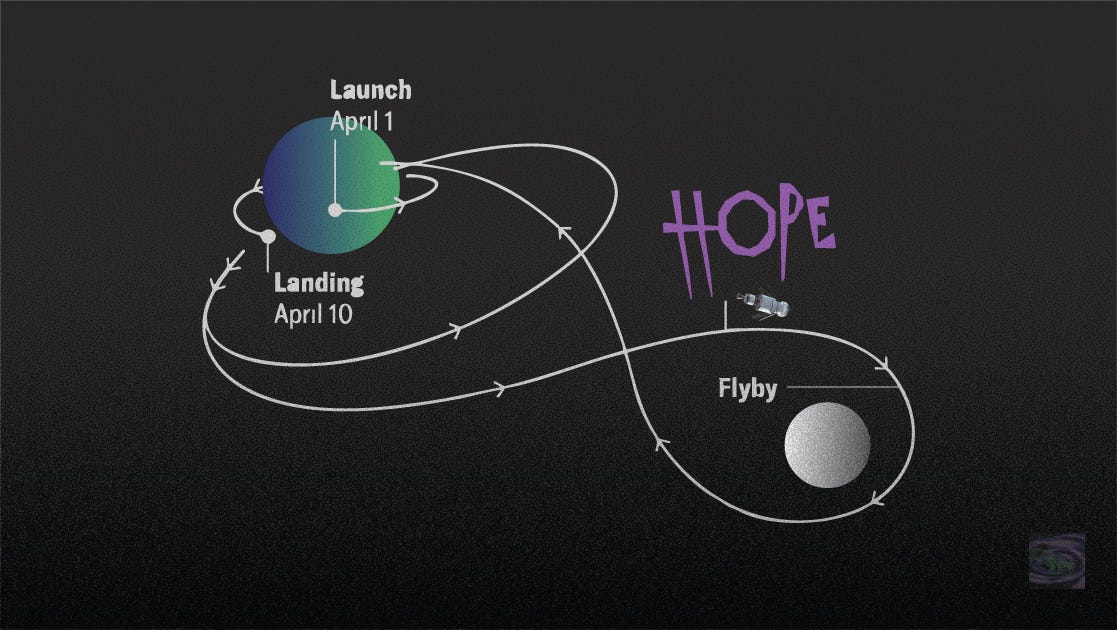
The crew, Commander Reid Wiseman, Pilot Victor Glover, and Mission Specialists Christina Koch and Jeremy Hansen, completed a crewed lunar flyby, travelling farther than any human mission in decades and returning astronauts to the Moon’s vicinity for the first time in over 50 years. It’s what NASA is calling a “relay race,” setting the preliminary work to land on the Moon, collect data, build a base and the foundation for a first crewed mission to Mars. Yet that’s not why they broke the internet.
It was the most human moments. Astronauts speaking humbly about existence, the sheer improbability of a planet with life suspended in the abyss. Their excitement, awe, wonder, curiosity, reflection.
NASA’s mission control even acknowledged the tone of the journey. “Copy, Moon joy,” they responded after one astronaut described the emotional impact of the lunar surface. That phrase quickly spread online too.
Maintaining hope in such an extreme environment is no easy feat. Space is isolating and physically demanding. It is an environment humans were never meant to inhabit. Having to live confined in a spacecraft with disrupted sleep and body rhythms, the lack of natural light and ambient noise, being away from family and home planet Earth, all require mental adjustments. When you put it into perspective, it’s a remarkable thing to commit to. Joy as a choice, even in the depths of darkness.
“We have a term in our crew that we coined a long time ago, the ‘joy train,’” Hansen said. “And it sounds like you saw a lot of joy up there. There was a lot of joy. We’re not always on the joy train, this crew, there are many times we’re not on the joy train, but we are committed to getting back on the joy train as soon as we can.”
Project Hail Mary
*SPOILERS AHEAD*
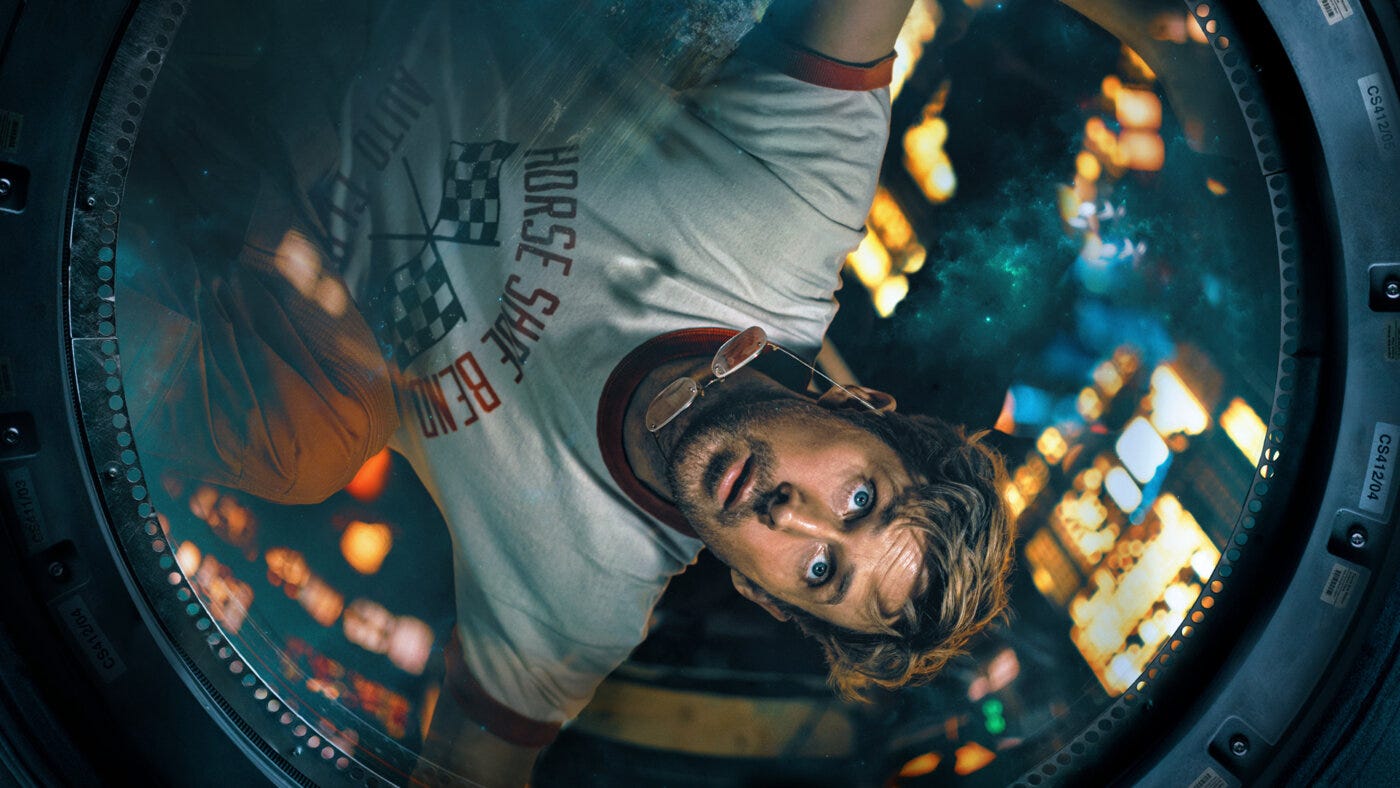
If Artemis II is a hope in reality, Project Hail Mary imagines hope on a cosmic scale. Coincidentally, the movie was released weeks before the launch of Artemis II in an accidental space-hope double feature. The story follows Ryland Grace, a middle school science teacher who wakes up alone on a spacecraft with no memory of how he got there. All he knows is that he has been sent to solve a problem that will determine whether Earth survives. In a post-apocalyptic setup, what emerges instead is an unexpectedly optimistic story about curiosity.

Grace never assumes Rocky, the alien he encounters, is a threat (as many space films tend to do). Instead, he instantly focuses on connecting and understanding Rocky’s language. Curiosity becomes the instinctual response. It feels almost radical to watch characters choose curiosity over fear. And like the Artemis II crew, they too have a collective mission.
Space seems to scale up human moments, whether it’s a hug in orbit or a friendship travelling in the vastness. At one point, after observing the Moon's near and far sides, a bright crater was spotted in between. Hansen named it in honour of his commander and friend, Wiseman’s late wife, Carroll.
From far enough away, borders and divisions blur. What remains is the desire to understand and connect. Artemis II and Project Hail Mary both imagine the same version of humanity, one that looks outward and begins with empathy, one that sees Earth as shared and the mission as collective.
Perhaps, in that regard, space is an amplified reminder of perspective. And with the distance, it feels ever more fundamental.
so talented